
Download product catalog : A570-3003-6
Glass-flake epoxy creates a more tortuous path for moisture and corrosive substances and is selected for thick coating layers and demanding service areas. This page helps contractors and corrosion-protection managers make a selection based on real project conditions.
Applications include decks, splash zones and selected marine structures within an approved coating system. Before approval, establish the service environment, contact or loading conditions and the expected interval to the next maintenance. These determine whether an individual coating is sufficient or a multilayer system and quality-control plan are needed.
Assess service type, permitted thickness per coat, application method, final surface profile and compatible topcoat. Record these in the purchase enquiry so proposals can be compared using the same information. A generic product name, colour or unit price alone is not a sufficient technical basis. Specify substrate, existing surface condition, service temperature, water or chemical contact, application method, downtime limits and required appearance.
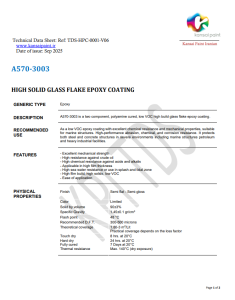
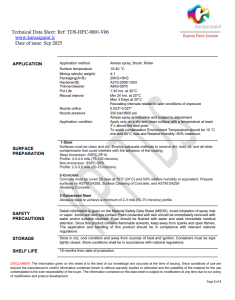
Apply uniformly with suitable equipment and control wet and dry film thickness. The datasheet for the actual product and applicable version is the primary reference for mixing ratio, thinning, induction time, pot life, environmental conditions, equipment, thickness and recoating intervals. Obtain technical approval where project conditions differ from that document.
Checks focus on film thickness, porosity, edge coverage and adhesion. Records support troubleshooting, future repair and assessment of the system’s service life. Witness samples, stage photographs and environmental records help resolve handover questions.
Excessive thickness or unsuitable spraying can cause solvent entrapment, porosity or an uneven surface. Avoid selecting a product without understanding its service, applying it to an unsuitable surface, or changing mixing ratio or thickness to save time. None replaces proper design and application.
Provide project name, application location, substrate and surface area, previous coating condition, environmental and service temperatures, contact conditions, preparation and application methods, available time and colour. Photographs and the previous coating system’s datasheets also help assess specialised and two-component systems.
No. Similar project names are not enough. Surface condition, service environment, application method and technical requirements must be reviewed.
No. Mixing ratio, thickness, drying time and coverage must come from the datasheet for the actual product and applicable version.
Substrate, service temperature and environment, contact conditions, preparation method, time limits, surface area and required appearance are the essential starting information.
Armani Fam reviews suitability, application conditions and technical documents after receiving project information. Send actual project details, surface photographs and substrate specifications for availability and selection guidance.