
Stone Block and Slab Epoxy Reinforcement: Vacuum and Mesh
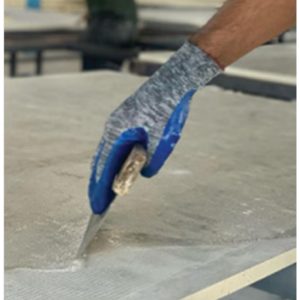
Perhaps the most common use of epoxy resins is in durable coatings and flooring, but this product is also used in other areas due to its unique properties. One of these multipurpose products is stone epoxy.
Epoxy stone is one of the most widely used materials in the stone and construction industry, used to repair, strengthen, fill cracks, and enhance the beauty of slab stones such as marble, granite, porcelain stoneware (Azna, Aligudarz, and Qorveh), travertine, etc. Like other types of epoxy resin, this product consists of two components: resin and hardener, which, after mixing, create a strong structure that is resistant to moisture, abrasion, and chemical agents.
To choose the best type of epoxy for your desired stone, receive technical advice, and procure quality materials, contact Armanifam specialists.
The main application of stone epoxy is to create a cohesive and strong structure for brittle and fragile natural stones (such as Aligudarz porcelain stoneware from the mines of Lorestan Province).
This material is usually applied to the back surface of building stones and then hardened in layered or radiant kilns to create a uniform, high-strength texture.
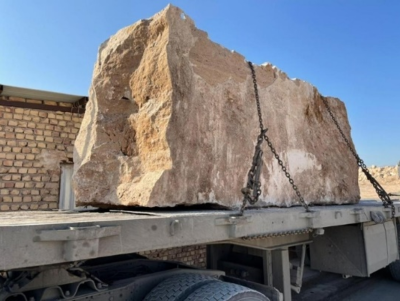
One of the specialized and vital applications of stone epoxy is its use on quarry stone (primary raw stone). Quarry stone is large, irregular, unprocessed blocks that are extracted directly from the quarry and transported to processing plants (such as stone crushers).
The main challenge of stone quarrying: cracks and holes
These heavy masses are naturally full of small and large cracks, cavities and pores. The presence of these discontinuities when cutting the quarry into thin plates (slabs) leads to the disintegration of the stone, cracking and a significant increase in production waste. This not only causes a waste of valuable raw materials; it also greatly reduces the profitability and efficiency of the production line.
Solution: Stone epoxy injection
This is where the role of epoxy stone as a structural reinforcement comes into play. By injecting this special resin, the epoxy penetrates deep into the cracks and cavities and, after hardening, forms a unified and highly resistant network within the stone. As a result, the mechanical strength of the stone slab before cutting is greatly increased and it is prevented from breaking during the cutting process.
Final result:
Significant reduction in stone waste in the production line
Types of stone epoxy
Reinforcing stone block with Epoxy | Comparison of Vacuum and Epoxy Paste Methods
1- Types of epoxy to strengthen stone block
To increase strength and reduce waste in the stone cutting process, two main methods are used, the choice between which depends on the type of stone and the depth of the cracks.
1-1 Vacuum epoxy (deep penetration and consolidation)
This method is ideal for repairing fine and deep cracks in the stone texture.
This advanced method is designed to repair fine, hairline and deep cracks in the stone texture and increases internal strength.
Step-by-step implementation process: :
- Placing the stone block inside a vacuum chamber (large, special nylon).
- Creating a vacuum to reduce trapped air from the grooves and cavities of the stone.
- Injection of special epoxy resin, which penetrates accessible cracks in the stone due to the vacuum created.
- Polymerization of epoxy and formation of a solid and integrated network within the stone.
- Cutting the reinforced block after the specified cure; reinforcement reduces risk but does not eliminate fracture.
✅ Best choice for : Granite, marble, and travertine stones with many internal cracks.
⚠️Crucial point : Preventing yellowing in white stones
One of the most important challenges in using epoxy for luxury, bright stones (such as white porcelain, white marble, crystal) is the phenomenon of yellowing, which is an inherent characteristic of epoxy. This occurs especially when the stone is exposed to direct sunlight (ultraviolet rays).
Selecting resin for light-coloured stone
- Using premium grade epoxy resins with UV resistant chemical bases
- Using light stabilizing additives in formulations for white stones
- Check the manufacturer’s stated colour stability and test a sample under the intended exposure; epoxy is not guaranteed never to yellow.
To select the appropriate method and material based on the type of stone, crack dimensions, and final environmental conditions of the stone, contact Armani Fam specialists.
2.1 Epoxy Coupling Paste (Surface and Structural Reinforcement)
Due to the cracks in the quarry, to create strength and prevent breakage when cutting the quarry stone in stone cutting factories, epoxy paste and special mesh are used for this task, according to the type of stone.
This method is ideal for managing larger cracks, large joints, and reinforcing fragile edges of the stone block, acting as an external retaining formwork.
Step-by-step implementation process:
- Preparation of two-component epoxy paste (combination of resin and hardener) based on modified epoxy resin
- Smear the surface of the stone slab (especially around cracks and edges) with the first layer of paste.
- Stretching fiberglass mesh or special fibers over the impregnated surface to create exceptional tensile strength.
- Apply a final layer of epoxy paste to completely cover the mesh.
- Waiting for the system to dry and harden completely before cutting.
✅ Best choice for : Porcelain, marble, and quartz with sharp seams and vulnerable edges.
- Result: After drying, this system acts like an external retaining mold and prevents the scattering of stone pieces during cutting.
Summary and Choosing the Best Method: Which option is best for my stone?
To make a quick decision, read the comparison table below:
A quick comparison of the two methods
| Feature | Vacuum epoxy | Epoxy block paste |
| Target crack type | Small and deep cracks | Epoxy paste for large cracks and block edges |
| Mechanism of action | Deep penetration and internal integration | External covering and restraint with netting |
| The main advantage | Strengthening the entire structure | Prevent breakage and scattering during cutting |
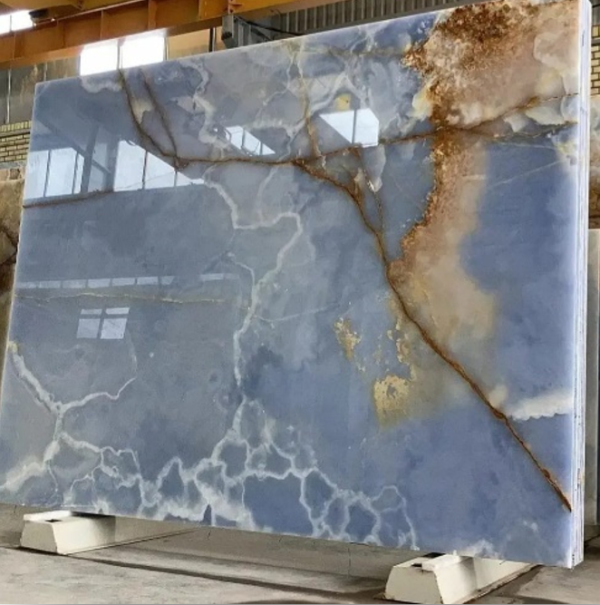
1- Comprehensive guide to epoxy stone slabs: choosing between the reinforcement method and the beautification method
Slab stones have a special place in modern architecture due to their large dimensions and natural beauty; but these same characteristics necessitate the need for proper preparation for better durability and appearance. In the final stage of slab processing, two main techniques using epoxy are used:
Back-of-the-rock epoxy (with mesh) for reinforcement and clear topcoat epoxy for polishing and protection.
The right choice between the two can mean the difference between a lasting project and a risky one.
1-2 Epoxy Backing Stone (Epoxy with Mesh): A Defensive Shield Against Failure
This method is an engineering solution that aims to increase the bending and mechanical strength of thin or brittle stones. In this system, epoxy is not just an adhesive; it is part of a composite structure.
The mesh increases the strength, integrity and resistance to fracture of the stones. The epoxy is the reason for the mesh to adhere to the surface of the stone and prevents it from separating.
When should we use this method?
- When using marble, travertine, or porcelain stones with a small thickness (usually under 2 centimeters).
- When the stone has natural hairline cracks or veins with a high risk of spreading.
- For high-traffic facade stones, stairs, and flooring that are under constant stress and pressure.
Implementation process: precise and practical
1. Surface preparation : The back of the stone becomes completely clean, dry, and dust-free.
2. Impregnation : The first layer of special epoxy paste is applied evenly to the back of the stone.
3. Installing reinforcing mesh :Fiberglass mesh or a special polymer mesh is pressed and flattened over the dough layer. This mesh acts as reinforcement.
4. Final coating : A second layer of epoxy paste is applied to completely cover the mesh, ensuring that no part of the mesh is exposed to the air.
5. Timing : The stone is placed in controlled conditions for a specific period of time (according to the epoxy manufacturer’s instructions) to complete the hardening process.
Key advantages of this method :
May reduce the risk of breakage when correctly selected and applied; no universal percentage applies.
Performance depends on the stone, mesh, resin, bond quality and handling conditions.
Structural integrity :
- Prevents the scattering of pieces in the event of a crack and increases safety.
- Possibility of using thinner stones
- This leads to cost savings and a reduction in the building’s dead load.
The ultimate goal :Increasing tensile strength and preventing stone from breaking during transportation, installation, and especially against forces applied to the facade.
2-2 Clear epoxy surface (finish): Polish and protection for stunning streaks
This type of epoxy is used to cover surface defects and small pores in the surface of the stone. The clear epoxy with a low concentration easily penetrates into small cracks and gives the surface of the stone double the shine and beauty. This type of epoxy is suitable for stones with beautiful veins and patterns such as granite, onyx, patterned marbles and decorative stones with a stunning visual effect.
This method, which is considered the final stage of luxury stone processing, is designed not for strength, but to complement beauty and increase surface durability.
When should we use this method?
- For stones with exceptional colors and veins: such as patterned granites, colored marbles, onyx and quartz.
- When we need a shiny, polished, non-porous surface for luxury flooring, kitchen countertops, or designer tables.
- To protect the stone from stains (oil, coffee) and moisture.
Execution process: the delicate art of final finishing
۱. Subbing : The surface of the stone is completely smoothed and leveled with a sanding machine.
۲. Deep cleaning :The surface of the stone is carefully cleaned and dried so that no particles remain in the pores.
۳. Epoxy application : Clear epoxy with low concentration spreads evenly on the surface. Its low viscosity allows deep penetration into all the tiny pores.
۴. Professional payment : After complete hardening, the surface is polished again with a special machine to achieve a mirror-like shine and a completely smooth surface.
Key advantages of this method :
(Increases brightness and color depth)
- The color of the stone is brighter and its veins appear more three-dimensional and vibrant.
- Filling accessible pores can improve the finish. Stain resistance, moisture exposure and hygiene requirements must be checked for the specified product; pore filling does not establish antibacterial performance.
(Ease of maintenance)
- The smooth, non-porous surface is easy to clean and requires less maintenance.
This method is a complementary and beautifying process on the visible surface of the stone.
Main goal:
- Filling fine pores, creating a smooth and uniform surface, and increasing the brilliance and depth of the stone’s color.
Summary and comparison table: Which method is right for your project?
| parameter | Slab backing epoxy (mesh system) | Surface clear epoxy (finishing) |
| The main goal | Mechanical reinforcement and safety | Beautification and surface protection |
| place of execution | Back of the stone (non-visible surface) | Stone surface (surface view) |
| Formulation | Thick and sticky dough | Clear liquid with low viscosity |
| accompanying components | Fiberglass mesh | No mesh |
| The final result | Creating a fracture-resistant composite structure | Polished, shiny and stain-resistant surface |
| target stones | Marble, travertine, thin and fragile stones | Granite, onyx, veined marbles, quartz |
Combining methods depends on the project
Where testing and the processing plan justify it, both methods may be combined; the back of the stone is meshed for strength and its surface is coated with clear epoxy and polished for the final effect.
Armanifam specialized consulting
Choosing the right type of epoxy, the right brand, and the right application method has a direct impact on the durability and final beauty of your project. Armanifam’s specialized team, with years of experience in stone processing, is ready to provide these services:
- Stone sample examination and project needs analysis
- Providing quality raw materials (epoxy and mesh) with a warranty
- Provide detailed implementation instructions and technical support
For a free consultation and price inquiry, contact Armani Fam experts today.
Stone epoxy products and grade selection
Rangin Zereh Company is one of the leading manufacturers of epoxy stone products in Iran.
Armani Fam supplies Rangin Zereh stone epoxy products. Request the current technical data sheet for the exact grade before choosing a product.
K 600 Epoxy Stone Block Paste:
Dual solution for professional reinforcement
This product is a two-component paste based on modified epoxy resin and amine hardener, specifically designed for preparing stone blocks prior to vacuum or cutting processes.
Features and uses:
Combined system:
- It is usually used in conjunction with a special fiberglass mesh to create a highly resistant composite layer over the stone slab.
- Different grades suit different processing conditions; confirm the appropriate grade with its current technical data sheet.
- K 600B (medium viscosity): For surfaces with normal slope, good penetration and easy spreading.
- K 600H (high viscosity): For vertical or sloping surfaces, limiting sagging and creating a thicker layer.
- Final result: This product, with excellent adhesion and high strength, prevents the stone chips from breaking and scattering during cutting and minimizes waste.
Guide to Choosing Colored Stone Epoxy: From Repair to Final Protection
E 520S is a two-component, transparent, colorless product that is applied to all types of stone to strengthen, polish, or darken the stone’s color. This product can be used as a spray on granite.
E 700G is an amine hardener based epoxy gel used to fill large pores and cavities in stone. This product can be applied with a spatula or a squeegee.
E 502F This product is used for non-white stones and is generally used for the back of the stone and with a special mesh to strengthen the stone.
E 500F This product is a transparent varnish that is used for all types of stones and is generally used on the surface and back of the stone.
E510E is a transparent varnish that is formulated for light stones such as marble, marble, porcelain, crystal and also granite. The unique feature of this product is its high light resistance to sunlight.
E 510F is a transparent varnish for use on valuable white stones such as marble and crystal. This product is a suitable option for hard stones such as granite due to its excellent permeability and adhesion.
- Common implementation tips:
- 1. Surface preparation: The surface must be completely clean, dry and free of grease.
- 2. Ambient temperature: Use the application temperature range specified in the selected product data sheet.
- 3. Working time: Check the specified pot life at the actual material temperature and batch size.
- 4. Drying time: Follow the manufacturer’s cure schedule before cutting, polishing or handling.
Warranty and support:
All products with a guarantee of authenticity
Free technical support before and after purchase
Product comparison table:
| Product name | Main application | Implementation method | target stones | Key feature |
| E 700G | Filling large joints | Spatula / spatula | Compatible stones confirmed by testing | Thick gel, no settling |
| E 520S | Surface strength and polish | Spray / roll | Compatible stones; test on the intended granite | Transparent, adjustable gloss |
| E 502F | The strength behind colored stones | spatula | Non-white stones | Excellent adhesion to lace |
| E 500F | General strength behind/on the stone | spatula | Compatible stones confirmed by testing | Clear resin; confirm suitability |
| E 510E | Ultimate protection for clear stones | Roll / spatula | Light stones (marble, porcelain, …) | Check the manufacturer’s colour-stability rating |
| E 510F | Ultimate protection for luxurious white stones | Roll / spatula | Precious white stones (white marble, crystal) | Check colour stability and adhesion data |
Important reminder:
Choosing the right product requires precise knowledge of the stone type, environmental conditions, and expected results.
📞To inquire about pricing, receive complete technical information (Data Sheet), and select the appropriate grade for your production line, contact Armanifam specialists.
Confirm any required certification and its scope for the specific product; a general product description does not establish compliance.
Armanifam – Official representative of Ranginzareh epoxy stone products
Contact Armanifam for advice and to provide special stone epoxies.

Slab stone refers to large, square stones that are cut by a slab saw.