
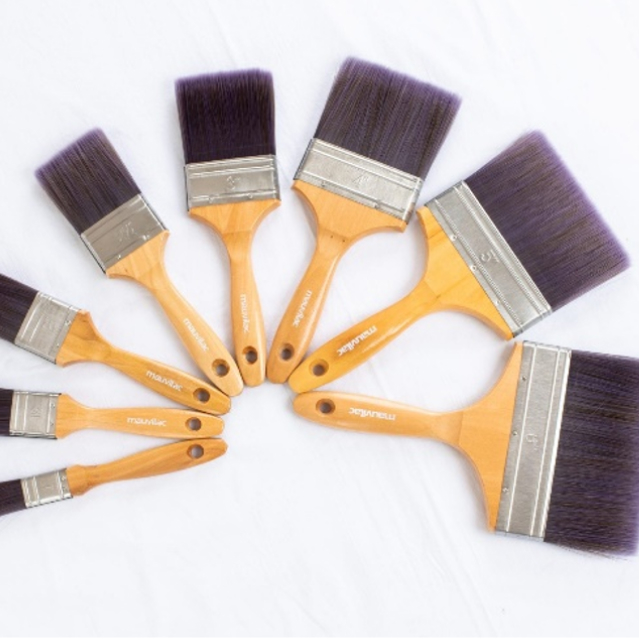
Paint Brushes: Selection and Marine Coating Applications
Quick answer: Brushes can be useful for detail work, touch-up and stripe coating in specified systems. Check the permitted application method and tool against the actual product data sheet and application guide.
Select the brush for the task
Bristle material, head shape, width and bristle retention must suit the coating and surface geometry. A brush that sheds bristles or deteriorates in the solvent can compromise the film.
Flat, round or fan?
- Flat brushes can suit many small areas and wider strips.
- Round or dedicated stripe-coating brushes may be required for details or wetting pits, according to the product instructions.
- Fan brushes are mainly associated with artistic work and are not a universal choice for ship protective coatings.
No single shape is best for every industrial task. Comfortable weight and access to corners also matter.
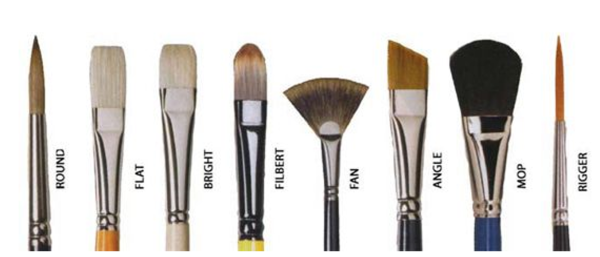
Examples of painting-brush shapes; select the protective-coating tool for the product and task.
How are brushes used in marine coatings?
Possible uses include touch-up, small areas and stripe coating of edges and welds. Check whether the product permits brushing for full application or only local repairs.
SeaStock should not simply be treated as another name for alkyd or acrylic paint. An epoxy binder also does not automatically rule out brushing; some products are designed for that method. The actual data sheet governs selection.
Stripe coating
Some systems require local application on edges, welds and areas that spray application may not cover evenly. Brush type, sequence and number of stripe coats must follow the product guide and project specification.
Application quality checklist
- Prepare the substrate as specified; a brush does not replace preparation.
- Control thickness and avoid paint build-up and excessive brush marks.
- Respect the pot life of a mixed two-component coating.
- Check overcoating intervals and environmental conditions in the data sheet; surface dryness alone is insufficient.
Common mistakes
Using one brush for every coating, assuming every brushed film will fail, or recoating without checking the interval can lead to poor decisions. Quality depends on the tool, product and application to specification.
Technical example: Jotun application guide, stripe-coating section. Do not apply one product’s instructions to every coating.
Explore marine paints and the paint data sheet guide, or consult Armani Fam.
