
A ship needs different coating systems in different areas. Immersion, sunlight, salt, cargo, traffic, cleaning chemicals and heat create different demands. A system appropriate for the underwater hull is not automatically suitable for a drinking-water tank, a working deck or an exhaust surface.
This English adaptation of our illustrated Persian guide connects each vessel area to the function of its coating. The diagram is an educational overview, not a construction drawing or a vessel-specific specification. For available products, see our marine paints and coatings.
A quick guide
- Underwater areas need a specified anticorrosive system and a compatible fouling-control finish where required.
- Topsides and superstructures need suitable protection against weather and sunlight.
- Decks require attention to abrasion, impact and the specified slip resistance.
- Tank linings must suit their contents and required approvals.
- Hot surfaces and onboard repairs require their own product and preparation checks.
- Coat sequence, mixing ratio, film thickness and curing come from the actual system’s technical data sheets.
Contents
- Numbered ship diagram
- Hull and waterline
- Decks and superstructure
- Tanks and cargo spaces
- Engine room, heat and equipment
- Onboard maintenance
- Preparation, application and inspection
- Frequently asked questions
Why one paint cannot cover the whole ship
A coating system is a coordinated set of compatible layers. A primer helps protect and bond to the prepared substrate; intermediate coats can build the specified protective barrier; the finish serves the intended exposure and appearance requirements. Some systems use different layer arrangements, so these roles should not be turned into a universal three-coat rule.
The old coating, accessible preparation, application environment and future repair method are also part of selection. Decide on the complete system rather than purchasing individual products without checking their compatibility.
Numbered ship diagram and coating areas
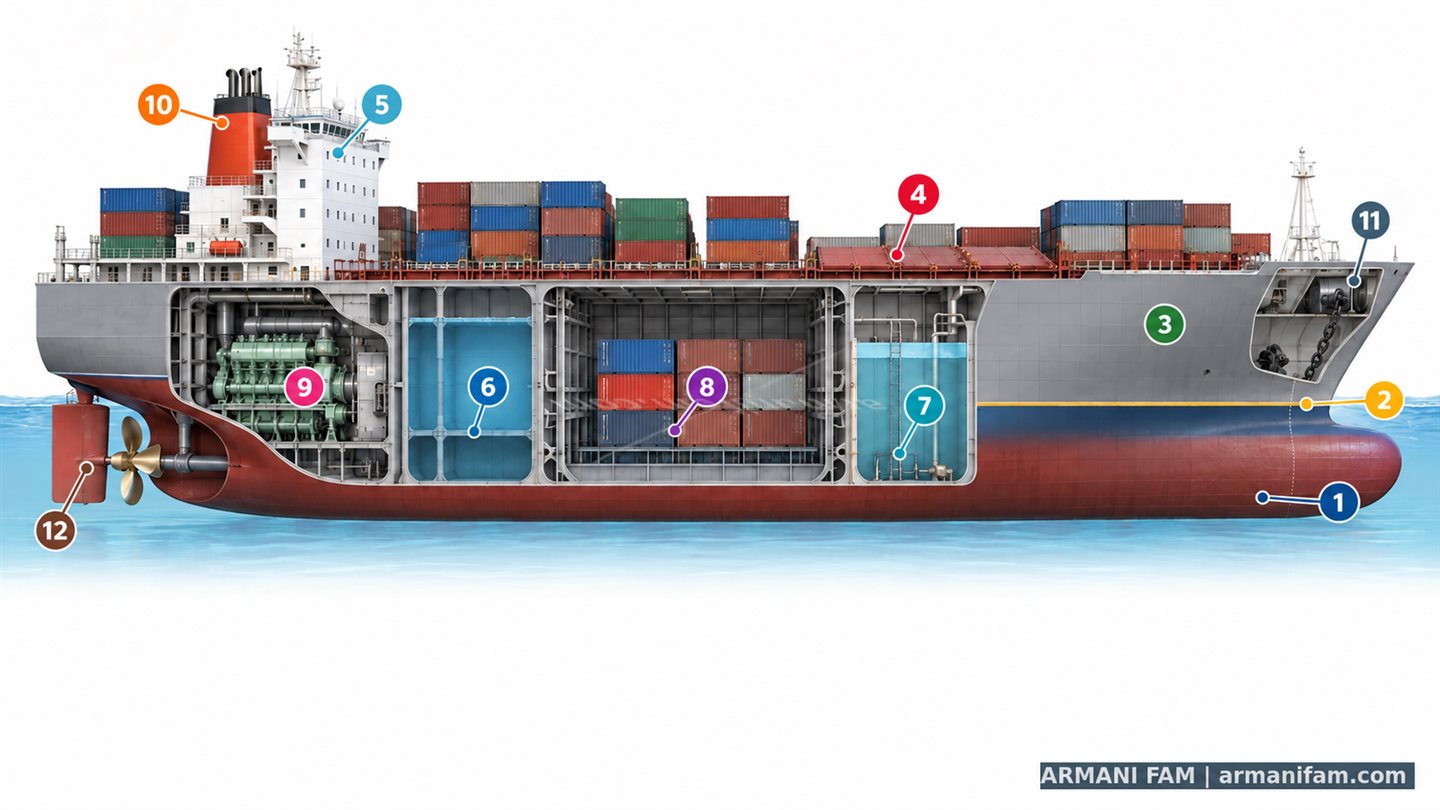
- Underwater hull: immersion and fouling control.
- Waterline / boot-top: alternating wet and dry exposure and wear.
- Topsides: above-water corrosion and weather protection.
- Deck: abrasion, impact and specified slip resistance.
- Superstructure: weather resistance and appearance.
- Ballast tank: lining for seawater ballast service.
- Fresh-water tank: lining selected for the actual water service; potable-water contact requires the relevant suitability.
- Cargo hold: protection matched to cargo and cleaning.
- Engine room: local exposure to oil, cleaning and heat.
- Funnel: product-specific heat resistance.
- Mooring equipment: abrasion and compatible maintenance.
- Underwater appendages: protection matched to their materials and service.
| Vessel area | Main exposure | System-selection focus |
|---|---|---|
| Underwater hull | Immersion, corrosion and biological growth | Specified anticorrosive layers, compatible tie coat where needed, and suitable antifouling or foul-release finish. |
| Boot-top | Wet–dry cycles, waves and mechanical wear | A system approved for the waterline exposure and required durability. |
| Topsides and superstructure | Salt, sunlight and weather | Compatible protective base and weather-resistant finish. |
| Decks and hatch covers | Traffic, abrasion, impact and cleaning | Suitable wear resistance and specified non-slip finish where required. |
| Tanks | Contents, cleaning, humidity and access | A lining approved for the specific service, with controlled preparation and curing. |
| Hot surfaces | Temperature and thermal cycling | A heat-rated product and compatible supporting system. |
| Maintenance areas | Old coatings and limited preparation | Products compatible with the existing system and achievable preparation. |
External hull: below water, at the waterline and above it
Underwater hull
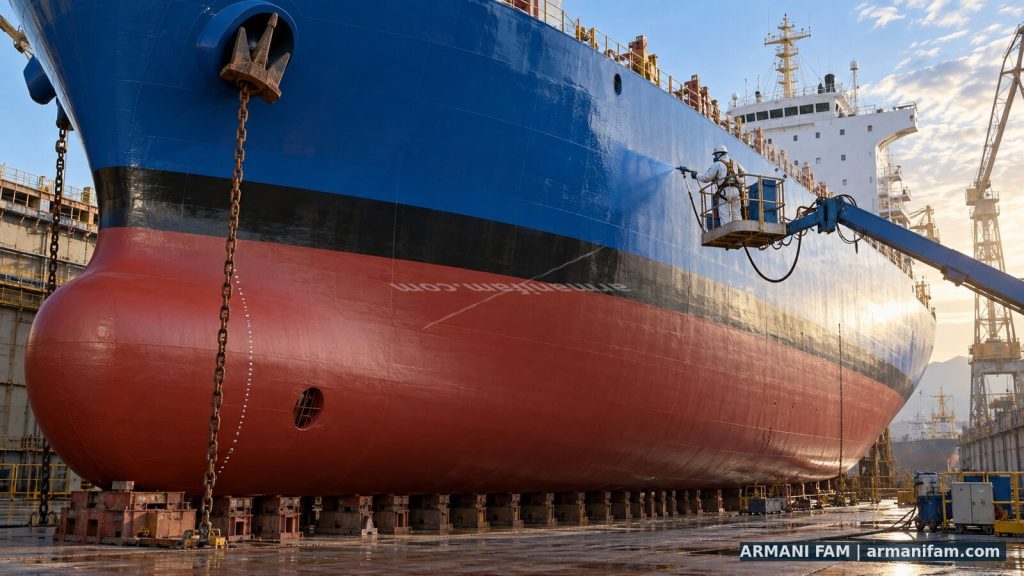
Continuous immersion creates demands that differ from atmospheric exposure. The anticorrosive system protects the substrate, while a compatible antifouling or foul-release finish manages growth. Selection also considers vessel activity, speed, idle periods, waters and the planned service interval.
For repair or recoating, identify the old system and follow the manufacturer’s guidance on compatibility, tie coats and immersion after curing. A general epoxy name does not establish suitability for the entire underwater system.
Waterline and boot-top
Changes in loading expose this zone alternately to air and water. Waves, harbour activity and local wear can add mechanical demands. Select a system intended for these conditions and inspect damaged areas during maintenance.
Topsides and freeboard
Above-water surfaces face weather, salt and sunlight. A suitable finish may support colour and gloss retention, but it still needs a compatible protective base. Surface condition and recoat limits matter as much as the finish family.
Decks, hatch covers and superstructure
Working decks and access routes
Traffic, impact, abrasion, water, oils and cleaning can affect deck coatings. Specify the required wear resistance and non-slip finish for the actual area. Excessively smooth or unsuitable rough finishes can create operational problems. Pay attention to welds, edges and bases of fittings.
Hatch covers and cargo-handling areas
Cargo movements and repeated impacts can damage exposed coatings. Select a maintainable system suited to local wear. Protect seals, running surfaces and moving components according to the equipment manufacturer’s instructions.
Superstructure and external accommodation areas
Weather resistance and appearance are relevant, but doors, rails, stairs and junctions still need careful preparation and repair. Inspect local corrosion rather than simply painting over it for a uniform colour.
Tanks, cargo holds and enclosed spaces
Ballast tanks
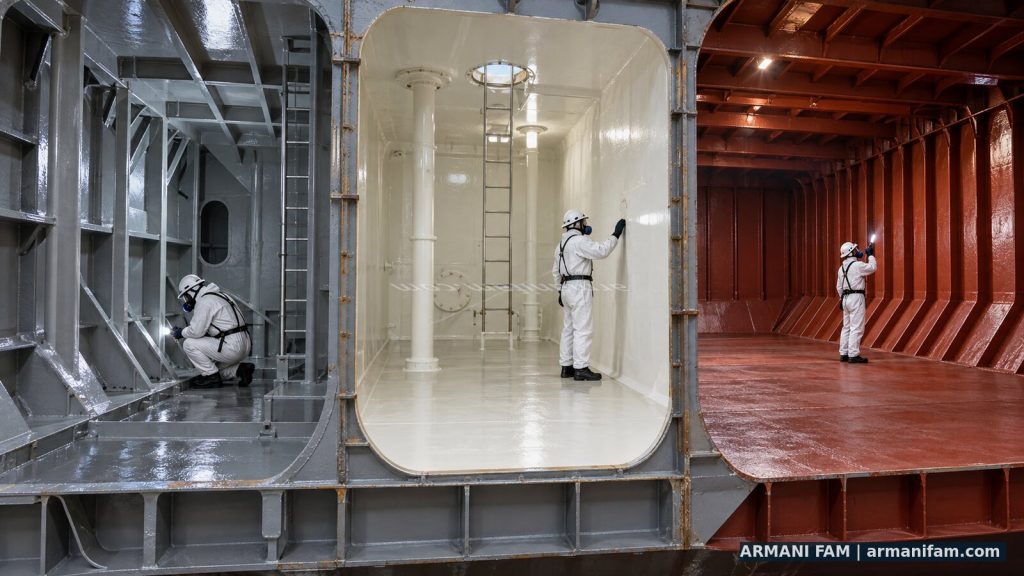
Ballast spaces may face seawater, humidity and wet–dry cycles, with difficult access around stiffeners and welds. Surface preparation, stripe coating and inspection are central. Check whether the applicable project falls under relevant protective-coating performance standards; do not assume that every vessel or repair has identical requirements.
Fresh-water and drinking-water tanks
Identify whether the tank holds potable water or another water service. Drinking-water contact requires a lining documented as suitable for that purpose under the project’s applicable requirements. Follow specified curing, cleaning and return-to-service instructions. A general industrial epoxy is not an automatic substitute.
Dry cargo holds
Cargo abrasion, impact, cleaning and possible contamination determine the lining requirements. Floors and lower walls often need particular attention. Match the system to the cargo and cleaning regime, not only to a generic description of “cargo hold paint”.
Oil or chemical cargo tanks
Evaluate the actual chemical, concentration, temperature, contact duration and cleaning process against the manufacturer’s resistance data. The term epoxy alone does not confirm compatibility with a particular cargo.
Void spaces and cofferdams
Condensation, humidity and limited access can make corrosion difficult to detect and repair. Include these areas in the inspection plan and select a system consistent with their environment and maintenance access.
Engine room, heat and specialist equipment
Engine room and bilges
Local oils, fuels, cleaning agents, moisture and heat must be considered. Degrease thoroughly and check the surface temperature. Coating work should not conceal an unresolved leak or substitute for equipment repair.
Funnel, exhaust and hot surfaces
Specify the real operating temperature and thermal cycling. Choose a product rated for that service and check whether its primer and preparation requirements differ from the general ship system.
Chain lockers, winches, bollards and mooring fittings
These areas may face repeated impact and abrasion. Plan accessible repairs and protect functional surfaces. Do not coat friction surfaces or moving parts unless the equipment instructions permit it.
Rudder, propeller and underwater appendages
Materials, flow, local wear and interaction with cathodic protection affect selection. A coating suitable for hull steel should not automatically be applied to a propeller or another metal component. Use a product and procedure approved for that component.
Internal accommodation
Appearance, cleaning, ventilation and relevant fire or health requirements can affect the finish choice. Interior decorative work does not remove the need to assess hidden corrosion or protection behind insulation.
Sea-stock coatings and onboard maintenance
Sea-stock products support practical maintenance during service or port stays when the specified work can be performed safely and preparation is achievable. They do not replace a structural assessment or all dry-dock repairs.
- Identify the damage, substrate and old coating.
- Remove contamination, loose rust and unsound coating using the approved procedure.
- Feather sound coating edges and prepare the repair area.
- Apply compatible repair coats within the TDS limits.
- Record the repair and plan further assessment at the next suitable maintenance opportunity.
Surface preparation and correct application
Survey the surface first. Remove grease and salts as required, remove unsound material, prepare edges and welds, and check cleanliness, dust, salts and surface profile against the specification. The final surface must meet the selected product’s condition requirements.
Mix components at the product-specific ratio. Observe any induction time, pot life, approved thinner limits and environmental conditions. Stripe coating may be specified for edges, welds, bolts and other difficult geometry. Respect minimum and maximum recoat intervals.
Inspection checklist
| Stage | What to check |
|---|---|
| Before preparation | Damage, contamination, old coating, access and weld/edge condition. |
| After preparation | Specified cleanliness, profile, dust, salts and dryness. |
| During application | Batch identification, mixing, environment and application method. |
| Between coats | Appearance, required dry film thickness, stripe coats and recoat interval. |
| Final inspection | Specified thickness, continuity, defects, repair completion and records. |
Common defects and possible causes
Loss of adhesion can indicate contamination or incompatibility. Blistering may relate to moisture, salts or retained solvent. Edge corrosion can arise where protection is insufficient. Cracking can be associated with excessive thickness or system stress. Early fouling can reflect unsuitable product selection, operating pattern or application. Diagnose the actual defect before choosing a repair.
Safety and storage
Use the SDS and the shipyard or vessel’s approved procedures. Coating work at height, with solvents, with airless spray or in enclosed spaces requires appropriate training and controls. Confined-space work needs the applicable entry arrangements, ventilation and atmosphere monitoring.
Keep materials in labelled original containers, within the manufacturer’s storage conditions and away from incompatible materials and ignition sources. Manage shelf life, spills and waste under the site’s procedures.
Technical advice and product selection
For a project-specific recommendation, send Armani Fam the application, substrate or stone type, existing condition, photographs, quantity and available preparation and curing time. Ask for the current technical data sheet (TDS) and safety data sheet (SDS) before use.
Contact Armani Fam for technical information and a quotation.
Frequently asked questions
Can one epoxy paint be used everywhere?
No. Each area’s exposure, substrate and approvals must be matched to a suitable product and complete system.
What is the difference between anticorrosive and antifouling paint?
They have different primary roles: protecting the substrate from corrosion and managing marine growth. A compatible system can include both.
Does sea-stock maintenance replace dry docking?
No. Onboard repair addresses work that is suitable and accessible in service. Some defects and areas require dock access or further assessment.
How thick should the coating be?
Use the specified dry film thickness, coat sequence and inspection criteria for the chosen system. There is no single figure for all ship areas.
Technical references
- IMO: protective coatings and relevant performance standards.
- IMO: Anti-fouling Systems Convention.
- OSHA: shipyard guidance.
References provide context. The vessel specification, applicable requirements and current product TDS/SDS govern the work.